When AI becomes a mask
The quiet damage of artificial imagery to personal brand, trust and authenticity
AI-generated imagery is everywhere right now.
From the bandwagon of glowing faces in sequinned bodysuits with candy canes that flooded Facebook last Christmas, to slick lifestyle visuals and polished “portraits” that look almost real.
The rise has been fast, impressive and, in many ways, inevitable.
And let me be clear from the start, I am not anti-AI.
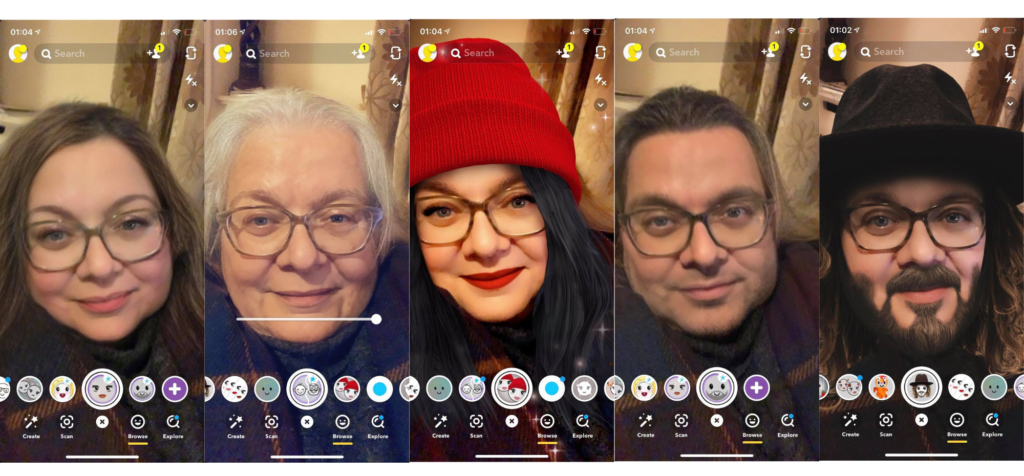
I use it, explore it and I’m curious about it. I can see its creative potential and practical value. And I’ve played with it out of interest, experimentation and, yes, sometimes boredom. I also recognise that it’s a natural evolution from Snapchat filters, Instagram butterflies-for-eyelashes and all the other digital layers we’ve added to ourselves over the years.
This is not a rant. This is a reflection.
Because while AI can be a tool, it is increasingly being used as something else.
A mask.
And that distinction matters far more than most people realise.
Tool or mask - and why the difference matters
First of all, as I said, this is not a rant.
AI imagery is incredible and can be genuinely useful in so many ways. I’m wowed on almost a daily basis by what it can achieve. The appeal is obvious and understandable and it can work beautifully for so many things, including (but not limited to):
stock style visuals
abstract concepts
blog headers and backgrounds
illustrating ideas, processes or metaphors
- campaign mock-ups and visual planning
Used consciously, transparently and strategically, AI can save time, reduce costs and unlock creative possibilities that might be difficult, expensive or even impossible to photograph.
That is not the issue.
The issue is when AI quietly replaces real presence, real identity and real connection.
When it becomes a substitute for being seen, rather than a support for expression.
Because there is a profound difference between using AI as a tool and using it as a shield.
And I am seeing that line blur more and more.
Am I threatened by AI?
No. Genuinely, no.
I think there are areas of photography and visual creation where AI will be brilliant. In fact, I think it already is. I can see huge potential in conceptual imagery, illustrative work, abstract visuals, backgrounds, campaign ideation and creative experimentation that can support businesses. And I will almost certainly explore some of those avenues myself.
Progress doesn’t scare me. Stagnation does.
What I don’t believe is that AI will replace the need for authentic human representation. If anything, I believe the opposite will happen. As AI imagery becomes more widespread and more polished, the value of real, recognisable, human imagery will increase.
Because when everything starts to look engineered, authenticity becomes the differentiator.
Trust becomes the differentiator.
Realness cuts through.
And beyond the image itself, there is something AI simply cannot replicate: the relationship. The connection. The energy exchange that happens between a photographer and the person in front of the camera.
The trust someone places in me when they feel vulnerable.
The way they relax when they feel safe.
The micro shifts in expression that only happen when someone feels seen, not scrutinised.
Those moments are not technical. They are human.
And it is those nuances that create images with depth, warmth and emotional truth. You don’t get that from a prompt. You get it from presence.
So no, I’m not threatened by AI.
But I am deeply protective of what it cannot replace.
Where it becomes uncomfortable
Increasingly, people are using AI-generated “versions” of themselves in place of real photography.
Often without disclosure. Often without context. And often while accepting compliments on how they look, as if what is being praised is actually them.
As AI improves, it is becoming harder to tell what is real and what is constructed. And that is where something subtle but important starts to unravel.
Not because AI is “bad”.
But because trust is fragile.
Personal brand is built on trust.
And trust is built on recognition.
When your audience believes they are seeing you, but they are actually seeing an engineered version of you, something quietly fractures – even if they can’t articulate it.
According to Edelman’s Trust Barometer, 81% of consumers say trust is a deciding factor in who they buy from and support.
Stackla’s research shows that 88% of people say authenticity is a key factor in deciding which brands to support.
Trust and authenticity are not abstract ideals.
They are commercially and emotionally foundational.
When visuals misrepresent reality – even gently, even unintentionally – that trust begins to erode.
The mask metaphor – and why it matters
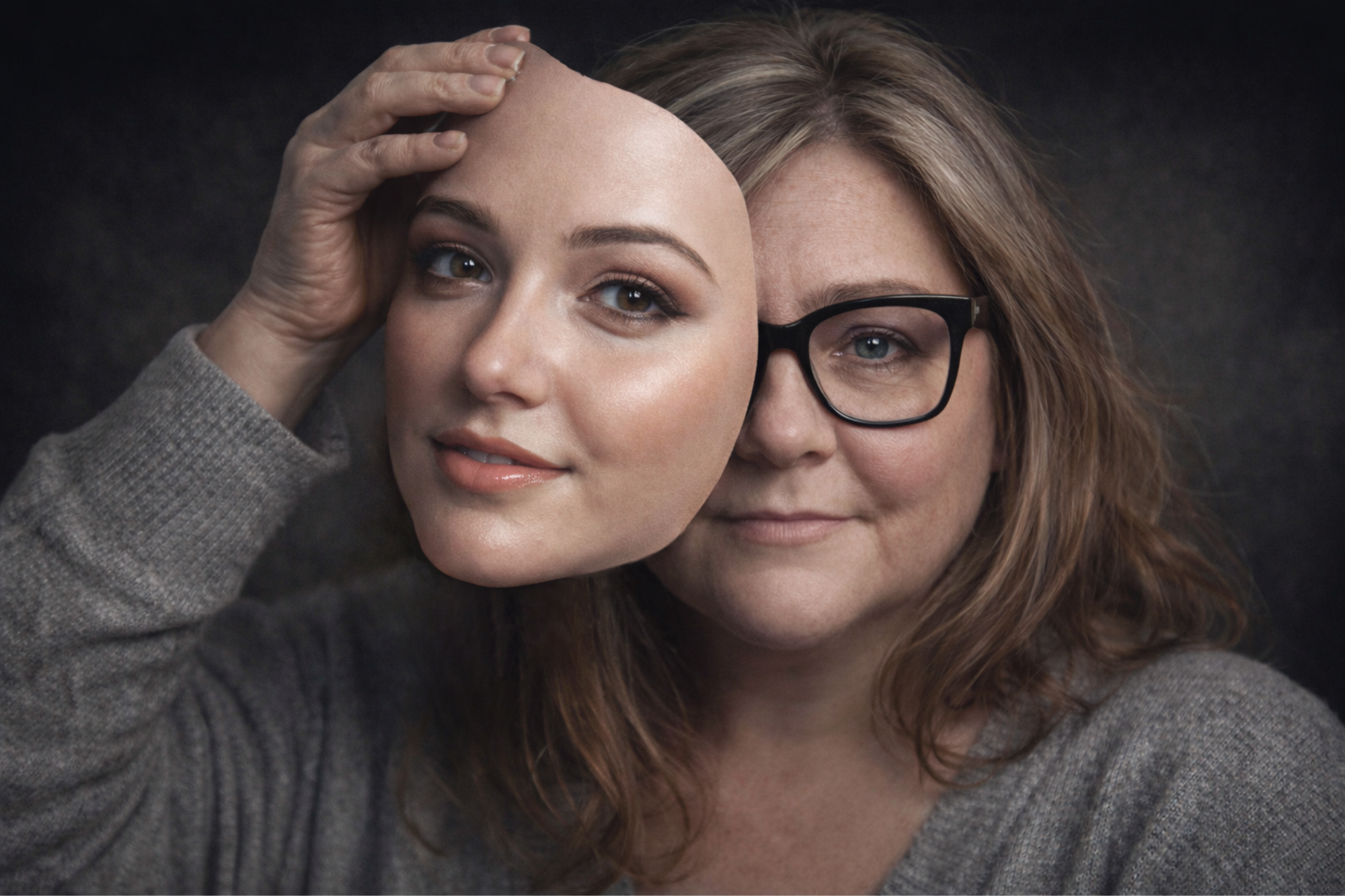
For this blog, I created the cover image in AI using a recent photo of myself, instructing it to generate a woman holding a mask of a younger version of her face.
It was quick. It was easy. It took around a minute.
But this isn’t a new concept for me.
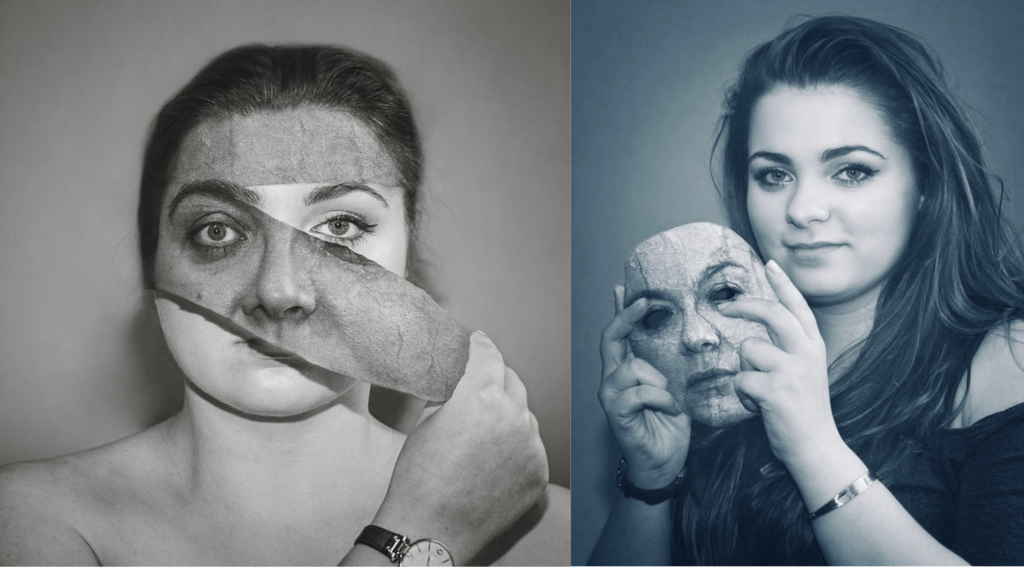
Fourteen years ago, I explored the idea of masks and identity through composite photography. I photographed both myself and my youngest daughter, then spent hours creating layered images in Photoshop. The results were far less polished than today’s AI output, and yes, I wince slightly at my editing skills from back then – but the intention was the same.
Exploring what we show.
What we hide.
And what sits underneath.
The technology has changed.
The psychology hasn’t.
Art is subjective and evolution is natural
I want to be absolutely clear about something.
I am not against new processes, digital art or AI as a creative tool.
And I am certainly not against artistic interpretation.
Art has always evolved – from oil to acrylic, darkroom to digital, film to mirrorless, tablet to AI. That evolution is part of human creativity.
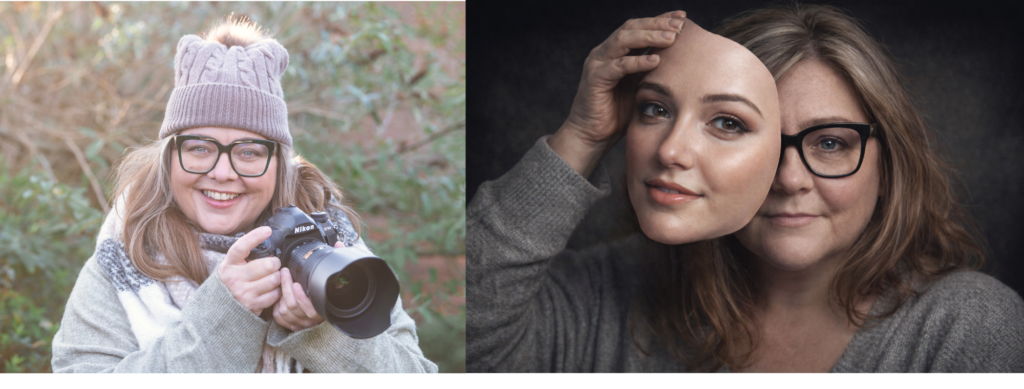
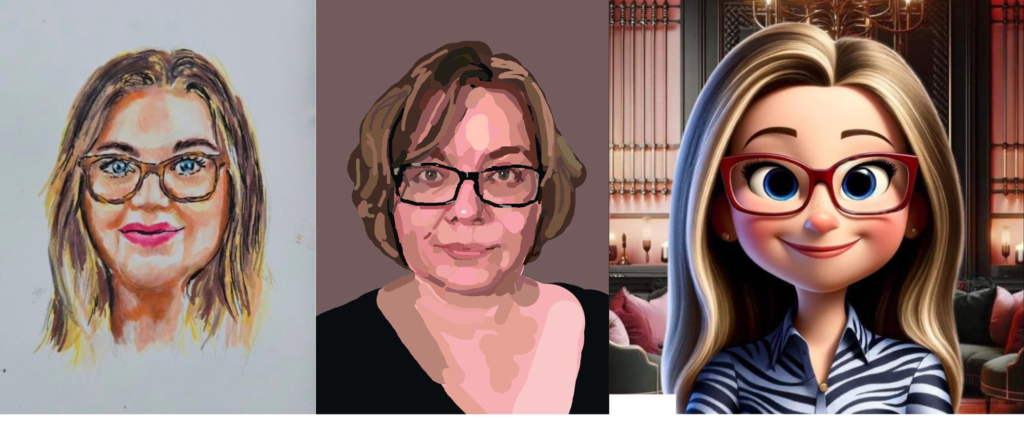
Further down this page are three images of me:
An acrylic portrait created by an Instagram artist using pens
A digital painting by Harry Darlington, exploring a new medium
A cartoon-style AI avatar created for an event by Chantelle Davidson
All of these are valid. All of these are creative. All of these are expressive.
Because they are clearly art.
They are interpretations. They are representations. They are playful, stylised, emotive or abstract. They are not pretending to be reality.
Art invites interpretation, connection and curiosity.
It does not claim to be a factual representation of who I am.
The problem is not creativity.
The problem is not innovation.
The problem is not new tools.
The problem arises when engineered perfection is presented as reality.
When a constructed, idealised version of someone is positioned as “this is me” without context or transparency.
That is not art.
That is identity editing.
And those two things are not the same.
I am pro-art, pro-expression and pro-evolution.
But I am also unapologetically pro-authenticity and human connection.
The erosion of authenticity
People do not just buy what you do.
They buy who you are.
Your energy, presence, warmth and imperfections.
Your humanity.
AI smooths, idealises and perfects. And in doing so, it often edits out the very things that make you relatable
And while that can look “better” on the surface, it often creates emotional distance.
People do not connect to perfection.
They connect to truth.
When your visuals no longer reflect who you actually are, you risk:
confusing your audience
diluting your identity
creating a disconnect between brand and reality
undermining your credibility
Even if people cannot consciously explain it, they feel it.
And once trust wobbles, everything else does too.
The identity impact we are not talking about
This is the part that matters most to me.
So many people already struggle with being seen.
With feeling “enough”.
With believing they are acceptable as they are.
AI can quietly reinforce the belief that:
“I am not good enough as I am.”
“I need a better version of myself to be visible.”
“I need to be improved before I can be seen.”
That is not empowerment.
That is erasure dressed up as confidence.
We already live in a culture of comparison, filters and unrealistic standards. Adding AI-generated “ideal selves” into personal branding risks deepening shame, self-criticism and disconnection rather than resolving it.
Visibility becomes performance instead of presence.
And that is a heavy psychological cost.
The psychological cost of idealised imagery
(get comfortable I’m going deep)
We already know that what we repeatedly see, shapes how we see ourselves.
Decades of psychological and media research show that constant exposure to highly edited, idealised images – from airbrushed magazine covers to filtered social media feeds – can have a tangible negative impact on our self-esteem and self-perception.
Studies consistently link exposure to idealised imagery with:
increased social comparison
higher self-objectification
reduced body satisfaction
lower self-esteem
Even when people know the images are edited or artificial, the impact still lands.
Research on social media users shows that engaging with idealised visual content is associated with more appearance comparison and lower self-perceived attractiveness. Meta-analyses of digital media effects confirm that repeated exposure to unrealistic imagery contributes to body dissatisfaction and negative mood.
This is not new.
It began with airbrushed models in magazines.
It continued with heavily filtered social media.
And now it risks being amplified by AI.
The medium changes.
The psychological mechanism does not.
Comparing ourselves to improbable standards – even when we intellectually know they’re fake – still affects how we feel about ourselves.
This is why the distinction matters.
A painting of you.
A digital illustration.
A stylised avatar.
These acknowledge themselves as art. They invite interpretation, not comparison.
But AI-generated perfection presented as “this is me” feeds the same psychological currents that have troubled body image advocates for decades.
Context and transparency matter.
The trust issue no one wants to address
There is also an ethical layer that is being largely ignored.
If you are using AI-generated images of yourself and not disclosing that when people compliment you on how you look, there is an uncomfortable truth here.
They are complimenting something that is not real.
Even if the intention is not deceptive, the impact can still be misleading.
Your audience believes they are engaging with you.
In reality, they are engaging with a construction.
Research from PwC shows that 86% of consumers say transparency is more important than ever.
When transparency is lost, credibility follows.
Once trust is damaged, it is extremely hard to rebuild.
Why real photography still matters
This is where I am unapologetically biased.
Real photography is not about looking perfect.
It is about being recognisable, being human and about being present.
A good photographer does not just take a picture.
They see you.
They hold space for you.
They capture your energy, not just your face.
Real images carry:
micro expressions
warmth
vulnerability
character
story
They create familiarity, build connection, and allow your audience to recognise you and feel they know you.
And that recognition is what builds loyalty.
AI can mimic.
It can approximate.
But it cannot feel.
People sense the difference, even subconsciously. And our sub-conscious drives the majority of our decisions (approx 90%).
The irony most people miss
Here is something interesting.
When people use AI to generate versions of themselves, the results are significantly better when they start with good quality, professional photography.
Clear. Well lit. True to them. Expressive.
In other words, the more authentic and high quality the original photography, the more realistic and accurate the AI output. I have clients who use photos I have taken as a basis for AI images with superb effect.
Even AI needs reality as its foundation.
You cannot bypass the value of being properly seen.
Do I see myself working with AI in the future?
I’m certain the use of AI will only increase. It’s inevitable and I’m not interested in pretending otherwise.
I am curious about it and open to it and will continue to explore ways it can support creativity, workflow, visual planning and storytelling.
But always alongside real representation.
Not instead of it.
For me, AI will be a layer. A tool. A support.
Not a substitute for being seen.
Because no matter how sophisticated the technology becomes, it still cannot replace human energy, emotion, presence and connection.
And it cannot replace the experience of being held in someone’s lens, rather than constructed in an algorithm.
I am not interested in creating better versions of people, but more in helping people be more fully themselves.
So yes, I’m sure AI will be part of my future.
But authenticity will always be the foundation.
A small but powerful shift
I had a conversation recently with a client about this very topic.
She had been using AI-generated images in her brand and we talked openly about trust, emotional impact and transparency.
As a result, she changed her process.
She now adds a visible watermark to any AI-generated images, clearly labelling them as such and has tagged me in with original photo credit.
Not because she has to.
But because she values honesty, respects her audience and understands that trust is part of her brand.
That, to me, is ethical, conscious and aligned use.
This is not about judgement. It is about choice.
I am not here to shame anyone. Or suggest that people don’t use AI.
I understand the nerves around being photographed, the desire to look better, safer, more confident.
And I understand why AI feels like an easier option.
But I also know, after years of working with people who feel vulnerable in front of the camera, that hiding does not build confidence.
Feeling safe to be seen does.
And being seen as you are, not as a constructed version of yourself, is where real growth happens.
The question I would gently offer
If you are using AI imagery of yourself, I am not asking you to stop.
I am asking you to ask yourself:
Am I using this as a tool?
Or am I using it as a shield?
Because those are very different things.
One builds connection.
The other quietly avoids it.
In closing
AI imagery can be useful, creative and efficient.
But personal brand is not built on efficiency.
It is built on trust, on presence and on human connection.
You are not a concept.
You are not a graphic.
You are not a prompt.
You are a person.
And that is your power.
Ps - The elephant in the room
The ethics of post-production – and what I have always taught
This is where my background matters.
Because I am not new to image manipulation.
And I am not naïve about editing.
I have used Photoshop for years, taught photography students and I have worked in commercial contexts where retouching is part of the brief. I understand post-production deeply.
And I have always been clear about one thing:
Editing should support reality, not replace it.
When I taught photography students, ethics around post-production was not optional. It was fundamental.
We talked about:
responsibility
representation
impact
and integrity
We talked about the difference between:
correcting lighting vs changing bodies
removing distractions vs removing identity
polishing an image vs rewriting a person
I taught them that your job is not to “fix” people.
Your job is to honour them.
To show them at their best, yes.
But still recognisable.
Still human.
Still real.
Because once you start idealising someone into a version they do not inhabit, you cross a line.
You move from enhancement into distortion. And distortion has consequences.
It affects how people see themselves.
It affects how they believe they are allowed to exist.
It affects what they think is acceptable, desirable or visible.
That is why I have always worked with a light and ethical touch in post-production.
Why I prioritise:
expression over perfection
energy over symmetry
presence over polish
And why I am deeply uncomfortable with the quiet normalisation of AI being used to “improve” people into something more acceptable.
Because I have seen, first-hand, how fragile people’s relationship with their own image can be. And I know how easily that relationship can be damaged.
This is not about being purist.
It is about being responsible.
It is about understanding that images are not neutral.
They shape perception, belief and identity.
And once you work with that awareness, you cannot unsee it.
Let's stay in touch!
I’d love to stay in touch. Click the Keep me posted button to join my mailing list and stay up to date with what’s going on, offers and updates.
Or if I can be of help then why not get in touch and send me a message.